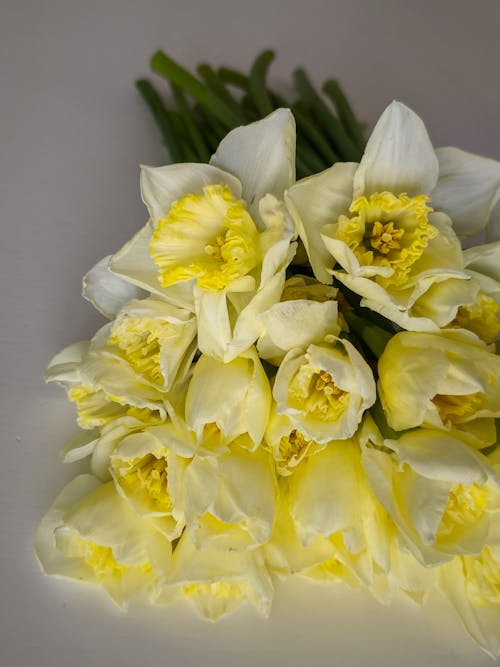
Choose an amaryllis kit for a big, tall bloom from one bulb in a pot, and a paperwhite kit for a fragrant bowl of small flowers with no soil. Both are easy to set up in one sitting, but both are toxic to dogs and cats, so skip them for a home with pets that chew plants. The ASPCA lists amaryllis and narcissus (the group that includes paperwhites) as toxic to dogs and cats, and says the bulbs are the most poisonous part of the narcissus.
This page helps a shopper pick a kit and set it up on the first weekend. It does not replace our full care guides, which you can use after the gift is open: forced amaryllis bulbs for indoor bloom and indoor paperwhite forcing.
Which kit is the better gift?
| Amaryllis kit | Paperwhite kit | |
|---|---|---|
| Look | One large bulb, tall stalk, big bell-shaped flowers | Several small bulbs, clusters of small flowers |
| Setup | Bulb in a pot with soil | Bulbs on stones with water, or in soil |
| Scent | Check the type | Most paperwhite types have a musky scent (Iowa State Extension) |
| Time to bloom | About four to six weeks of growth (Illinois Extension) | Roots in a cool, dark spot for 2 to 3 weeks first (Iowa State Extension) |
| Height | About a foot of stalk (Illinois Extension) | Can reach 18 to 20 inches and flop (Iowa State Extension) |
| After the bloom | Can be kept and bloomed again | Discard after flowering (Iowa State Extension) |
| Pets | Toxic to dogs and cats (ASPCA) | Toxic to dogs and cats (ASPCA) |
Pick amaryllis for someone who wants a plant to keep and grow in the garden or on a patio over the seasons. Pick paperwhites for a quick, fragrant bowl for a table, with no plan to keep the bulbs.
🌱 Get Personalized Plant Picks
Answer a few quick questions and we’ll match plants to your exact yard conditions.
Find My Plants →What to look for in a kit
- Bulb size. Illinois Extension says the largest amaryllis bulbs have the most blooms. A larger bulb costs more, and that is the reason.
- A pot with drainage. For amaryllis, Illinois Extension says a decorative container needs drainage holes and should be only 1 to 2 inches larger than the bulb.
- A heavy base. A top-heavy stalk tips a light pot. A heavy ceramic or clay pot helps.
- A shallow bowl and stones for paperwhites. Iowa State Extension says paperwhites can be forced in clear, shallow bowls with no drainage holes, set on washed gravel or stones.
- Waxed bulbs are decorations. A waxed bulb is dipped in wax and needs no soil or water. It is a one-season item that is usually discarded. If you want a plant to keep, pick a kit with soil and a pot.
Shop flower bulb kits on Amazon
Compare kits for pot size, bulb size, and what is included. We may earn a commission at no extra cost to you.
Amazon · Amaryllis kit Amazon · Bulb kit with pot Amazon · Paperwhite kit Amazon · Narcissus kit
First-weekend setup
Amaryllis kit. Illinois Extension says to plant the bulb with the top third above the soil line, water it well until water flows out of the bottom, and set it in a warm, sunny area. Water only when the top two inches of soil feel dry. If the stalk looks weak or spindly, it needs less water or more light. Turn the pot now and then so the stalk does not lean. After the buds open, move it out of direct sun to make the flowers last longer.
Paperwhite kit. Iowa State Extension says to set bulbs on stones, add more stones around them while leaving the tips exposed, and add water until it touches the bottom of the bulbs. Keep the water at that level. Place the bowl in a cool (45 to 50 F), dark spot for 2 to 3 weeks to encourage roots. When the shoots are about 3 inches tall, move the bowl to a sunny window at 60 to 70 F. Because paperwhites can get tall, they often need staking. A few stakes and some twine are enough.
Our guide to forced bulb timing for indoor bloom can help you plan a bloom date.
If the gift will be wrapped and kept for a while
Keep the kit cool and dry until planting day. If the bulb has been sitting for weeks, check for soft spots or mold, and discard a bulb that is soft. Tell the recipient to follow the setup steps on the box or the steps above.
After the gift is home
Plants do best when they are not moved around too much. Our guide to acclimating a gift plant after purchase explains the first days in a new room.
Pets: who should skip this gift
The ASPCA lists amaryllis (Amaryllis species) as toxic to dogs and cats. Its signs include vomiting, depression, diarrhea, abdominal pain, drooling, loss of appetite, and tremors. The ASPCA lists narcissus, including the type called paper white, as toxic to dogs and cats, with bulbs the most poisonous part. Large ingestions can cause more serious signs.
If the recipient has a dog or cat that chews plants, choose a different gift. If you keep the kit anyway, place it where pets cannot reach it, and do not leave loose bulbs on the floor or table. For gift plants that are listed more safely, see pet-aware gift plants and flowers. If a pet eats any part of a bulb or plant, call your veterinarian or the ASPCA Animal Poison Control Center at (888) 426-4435. Do not wait for signs.
Shop forcing vases and bulb pans on Amazon
Stones, bowls, and stakes for tall, top-heavy blooms. We may earn a commission at no extra cost to you.
Amazon · Forcing vase Amazon · Bulb pan Amazon · Plant stakes Amazon · Decorative stones
Is an amaryllis kit a good gift?
Yes for someone who wants one big showy bloom and will keep the plant. Skip it for a home with pets that chew plants.
Are paperwhites safe for cats and dogs?
No. The ASPCA lists narcissus, including paper white, as toxic to dogs and cats.
Can paperwhites bloom again?
Iowa State Extension says paperwhites can't be forced again and should be discarded after flowering.
How long does an amaryllis kit take to bloom?
Illinois Extension says to expect blooms after four to six weeks of growth.
Sources
- Illinois Extension, How to Grow an Amaryllis Bulb Kit.
- Iowa State University Extension, Forcing Paperwhite Narcissus Bulbs.
- ASPCA Toxic and Non-toxic Plants: Amaryllis, and Daffodil (Narcissus, Paper White).
- ASPCA Animal Poison Control Center, (888) 426-4435.
Related reading
- Forced amaryllis bulbs for indoor bloom
- Indoor paperwhite forcing
- Forced bulb timing for indoor bloom
- Gift plant acclimation after purchase
- Pet-aware gift plants and flowers
Ready to match plants to your location? Try the PlantWise Plant Finder →