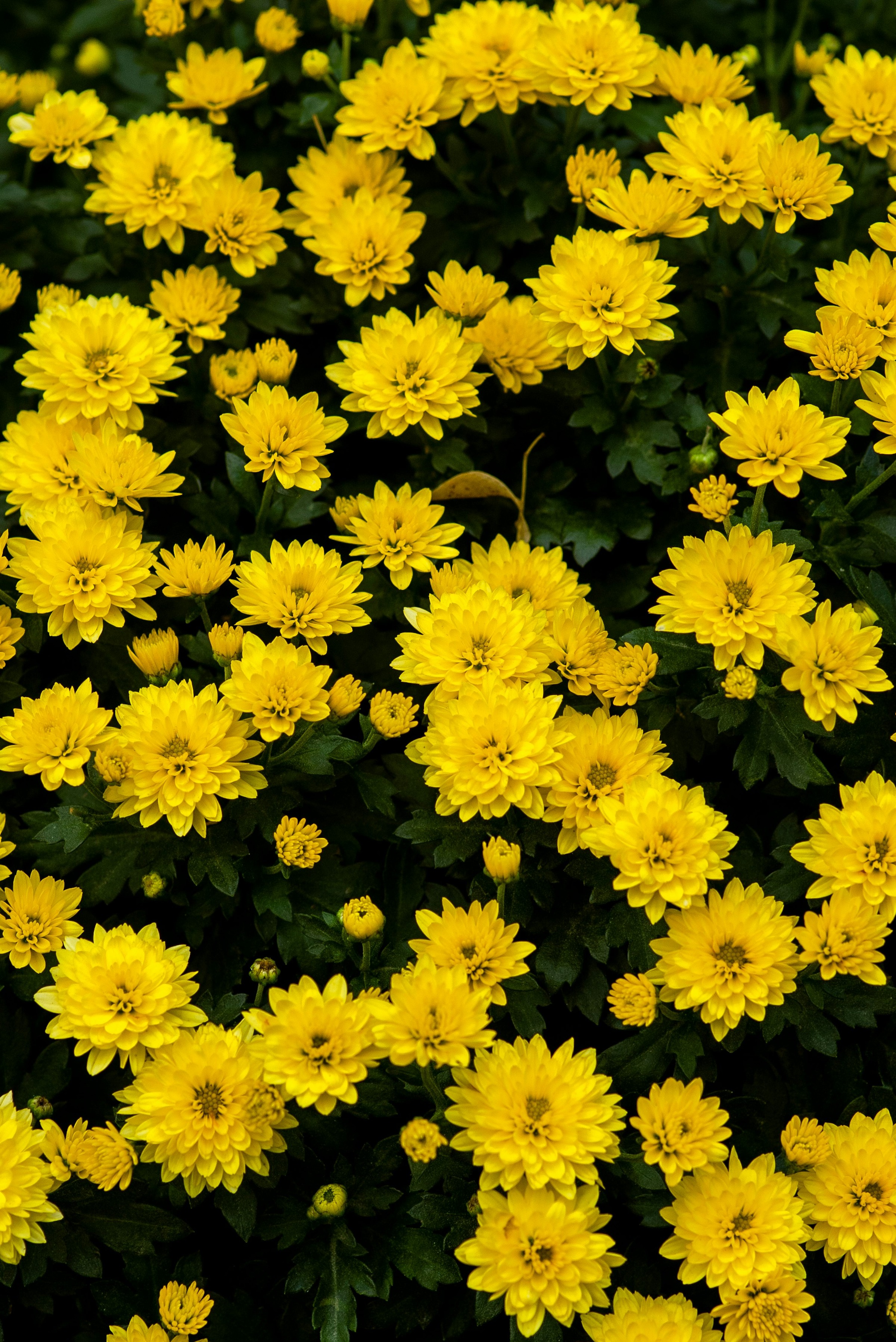
Plant mums in full sun and well-drained soil, setting the root ball at the same depth it grew in the pot, then water thoroughly. Before you dig, check two things: is yours a hardy garden mum, and does it still have time to establish before sustained freezing? In cold-winter regions, a blooming pot planted in November is a rescue attempt, not a dependable perennial investment.
Look for “hardy,” “garden mum,” or “perennial” on the tag, followed by a cultivar and a zone range. “Florist mum” or “pot mum” signals a seasonal display rather than a reliable outdoor perennial. Appearance alone cannot tell you which type you bought. Even hardy garden mums are less likely to survive when planted late.
Is it too late to plant mums in November?
If you want the best chance of a permanent planting in a cold-winter region, spring is better. Iowa State Extension says spring-planted garden mums establish over several months, while fall-planted flowering mums frequently do not survive winter.
Workable soil means you can dig, but it does not mean the plant has enough rooting time. Check your local forecast, the condition of the root ball, and whether the bed stays wet. If repeated hard freezes are close, protected pot storage may be the more practical choice.
| Zone and setting | A practical November decision |
|---|---|
| Zones 3 to 4, northern interior | Usually past the dependable establishment window. Prioritize protecting suitable hardy plants until spring. |
| Zone 5 | Late planting has substantial risk. A named, zone-rated cultivar and protected storage give you a clearer plan. |
| Zones 6 to 7, including much of the Mid-Atlantic | Soil may remain workable, but a flowering pot still has limited rooting time. Planting is possible, not a survival promise. |
| Zones 8 to 9 | Local frost timing and drainage matter more than the month alone. Confirm the cultivar's heat and hardiness range. |
| Zone 10 | Seek local advice and a cultivar suited to the climate. Do not assume a northern perennial label applies. |
Those are decision guides, not fixed frost dates. Coastal and inland gardens in the same zone can have very different autumn conditions.
Check a live hardy perennial mum on Amazon
This red mum listing explicitly says hardy and perennial, and lists zones 5 to 9. Confirm the seller's shipping eligibility, cultivar information, and current availability for your address. It is not a zone 3 or 4 recommendation, and late planting still carries risk.
Browsing other listings? Look for the word “hardy” in the listing title or description before you buy. A mum listing that does not say hardy may be a florist mum sold for one season of color.
As an Amazon Associate, PlantWise earns from qualifying purchases.
Amazon · Hardy red mum, zones 5 to 9Amazon · Search hardy mums
🌱 Get Personalized Plant Picks
Answer a few quick questions and we’ll match plants to your exact yard conditions.
Find My Plants →1. Choose the destination before removing the pot
Pick a bed with at least six hours of direct sunlight. Avoid a low spot where water collects after rain. Mums have shallow roots, and winter wetness is a serious problem.
If soil needs organic matter, improve a broader planting area rather than creating a soft, rich pocket inside heavy clay. Keep strong porch or security lights away from the planting if possible: long nights help mums set flower buds.
For a decorative arrangement that will stay in a container, our porch mum guide covers the display side. Permanent planting needs a different spacing and winter plan.
2. Water a dry root ball before planting
Check the potting mix, not only the garden soil. A root-bound mum can be dry inside while the surrounding bed is moist. If it is dry, water slowly and allow excess water to drain before handling the roots.
Remove decorative foil or a sealed outer container. The nursery root ball needs water to pass through rather than collect at its base.
3. Dig wide, but keep the planting depth unchanged
Make the hole about twice as wide as the root ball and no deeper than the root ball itself. The goal is room to work with the roots, not a deep pit.
Slide the plant out of its nursery pot. Gently loosen tightly circling outer roots so they can grow into the surrounding soil. Keep enough of the root ball intact to avoid unnecessary damage, especially when cold weather is close.
4. Set the crown level with the surrounding soil
The top of the root ball should meet the finished soil level. Do not bury the base of the stems to make a floppy plant stand upright.
Backfill with the surrounding soil and firm lightly. Water slowly to settle the soil, then check whether the plant has sunk. Correct the depth before adding mulch.
5. Leave room for the mature plant
Iowa State gives 18 to 24 inches as general spacing for garden mums. Follow the named cultivar's mature spread when it differs, particularly for large landscape selections.
A tight seasonal display is not a spacing model for a perennial bed. Leaving room now also lets you inspect the crown and water the root zone without soaking the flowers.
6. Water through dry spells, without saturating the bed
Check the root ball and nearby soil regularly while temperatures allow growth. Water when they are drying, then let excess moisture drain. Rainfall, soil texture, potting mix, and temperature affect the interval, so a rigid daily schedule is unreliable.
Do not add fertilizer as a late-fall rescue treatment. Spring growth is the time to revisit feeding. Cold weather, poor drainage, and limited establishment time are not corrected by more fertilizer.
7. Leave the stems and time winter mulch to the soil
Keep healthy stems standing through winter. When the soil begins to freeze, apply several inches of loose clean straw or pine needles for winter insulation. Avoid compacted leaves against the crown.
The aim is to reduce repeated freezing and thawing, not to keep the plant actively growing. Pull winter protection back in spring as conditions moderate and growth resumes. For the larger freeze-thaw problem, see frost heave and perennial winter mulch.
What if I cannot plant before the ground freezes?
Keep a suitable hardy mum in its draining pot and use the protected-storage options in overwintering mums. A pot left on open steps is not equivalent to a planted root ball. An unheated garage also needs temperature checks, since some become too cold or too warm.
Can florist mums be planted in the garden?
You can plant them for temporary color, but do not present that as a dependable perennial strategy. For the buying distinction, see five checks before buying perennial mums.
Should I remove all the flowers before planting?
Removing spent flowers can tidy the plant, but it cannot turn a florist mum into a hardy cultivar or create weeks of rooting time. Prioritize the right site, correct depth, moisture, and winter protection.
Source
Iowa State University Extension: Growing Chrysanthemums in Iowa supports the garden-versus-florist distinction, spring preference, sunlight, planting depth, spacing, and leaving old stems for winter. Regional timing above is conditional guidance, not a local freeze forecast.