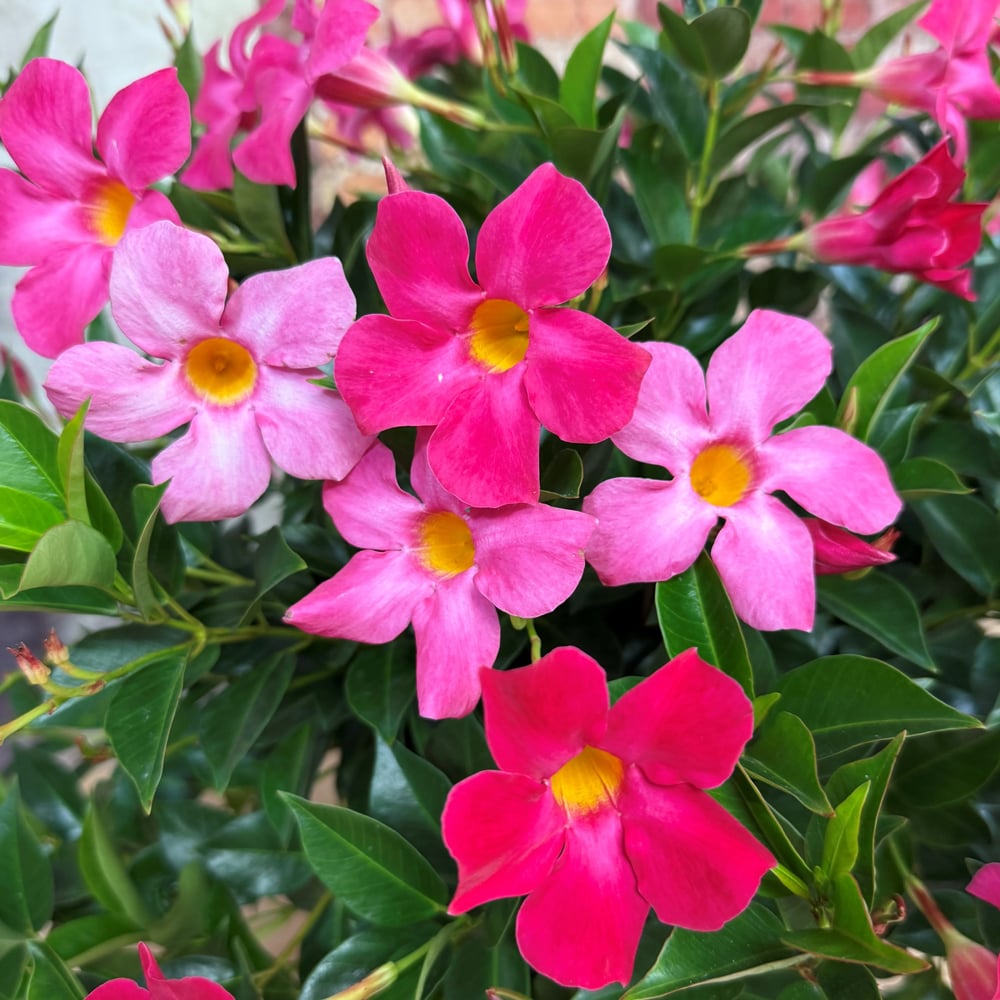
To keep a potted mandevilla alive through the cold months, bring it indoors before nights drop below about 50 degrees F, rinse it and check it for pests, and then either grow it in your sunniest window with the soil allowed to dry slightly between waterings, or cut it back and let it rest in a cool, bright, frost free room with very little water. Some yellow leaves and leaf drop in the first weeks are normal. Mandevilla blooms on new growth, so a hard cutback now does not cost you flowers later.
Mandevilla is a tropical vine. It only lives outdoors year round in roughly zones 10 and 11, and it stops growing well once nights turn cool. Everywhere else, the patio vine that flowered all summer needs a plan before frost. The good news is that it is one of the easier tropical plants to carry over, because it tolerates both approaches below.
When to bring it in
Go by the overnight lows, not the date. Mandevilla slows down in the 50s and is damaged by temperatures in the 40s, so move the pot in once the forecast shows nights near 50 degrees F. In cold zones that can be early in the fall season. In warm zones it may be close to the end of the year. Moving the plant while it is still mild outside gives it time to adjust before the heat comes on indoors and the air turns dry.
🌱 Get Personalized Plant Picks
Answer a few quick questions and we’ll match plants to your exact yard conditions.
Find My Plants →Prepare it before it comes inside
Outdoor vines often carry pests that explode indoors where there are no predators. A little prep now keeps them off your other houseplants.
- Cut it to a manageable size. Unwind the vine from its trellis, or cut the stems free. Trim it back to a size that fits your space. You can take it down to 8 to 12 inches if you plan to store it dormant.
- Wear gloves. Cut stems leak a milky sap that can irritate skin. Wipe your snips afterward.
- Rinse it. Give the plant a good shower with a hose, including the undersides of the leaves, to knock off spider mites, aphids, and whiteflies.
- Inspect closely. Check leaf undersides, stem joints, and the soil surface for mealybugs, scale, and fine webbing. Treat anything you find before the plant comes in.
- Check the pot. Make sure it drains and has a saucer. Leave repotting for later in the cold season or for when growth starts again.
Our guide to bringing houseplants indoors without pests covers this step in more detail, and the mealybug and scale guide helps if you find either one.
Option one: keep it growing as a houseplant
This works if you have a bright window. You may even get a few flowers.
- Light: as much as you can give it. A south or west window is best. In a dim room the vine will stretch and drop leaves. A grow light set close above the plant for 12 to 14 hours a day makes a big difference; see our grow light basics.
- Temperature: normal room temperatures are fine. Keep the plant away from heat vents and from cold drafts near doors.
- Water: let the top inch or two of soil dry before you water, then water until it drains and empty the saucer. Indoor mandevilla is far more likely to fail from soggy roots than from drought. A soil moisture meter helps you judge the root zone.
- Humidity: dry heated air invites spider mites. Group it with other plants or set it near a humidifier, and check the leaves every week or two.
- Feeding: skip fertilizer through the darkest part of the cold season. Start again with a diluted liquid fertilizer once days lengthen and you see new shoots.
Shop indoor light and watering helpers on Amazon
A full spectrum grow light for a dim room, a soil moisture meter for checking the root zone before you water, insecticidal soap for mites and mealybugs, and a deep plant saucer to catch runoff. We may earn a commission at no extra cost to you.
Amazon · Grow light Amazon · Moisture meter Amazon · Insecticidal soap Amazon · Deep plant saucer
Option two: let it rest in a cool, bright spot
If you lack a sunny window but have a cool room, a sunroom, or an attached garage that stays roughly 50 to 60 degrees F and never freezes, you can hold the plant in a semi dormant state.
- Cut the vines back to about 8 to 12 inches above the soil.
- Set the pot where it gets some light. A bright window in a cool room is ideal. Full darkness is harder on mandevilla than on bulbs or tubers.
- Water lightly, about every three to four weeks, enough to keep the roots from drying out completely. Cold, wet soil leads to root rot.
- Do not fertilize while it rests.
The plant will look bare, and it may drop most of its leaves. As long as the stems stay firm and green inside when you scratch them, the plant is alive.
Common problems indoors
- Yellow leaves that drop: normal in the first few weeks as the plant adjusts to lower light. Ongoing yellowing with wet soil points to overwatering. Our guide to yellow leaves on houseplants walks through other causes.
- Fine webbing and speckled leaves: spider mites. Rinse the plant in the shower, raise humidity, and see our spider mite guide.
- White cottony spots in leaf joints: mealybugs. Dab them with rubbing alcohol on a cotton swab or treat with insecticidal soap, and repeat weekly until they are gone.
- Long, thin stems with small leaves: not enough light. Move it closer to the window or add a grow light, and pinch the tips to keep it bushy.
- Soft, dark stems at the soil line: rot from cold, wet soil. Cut back on water right away and let the pot dry out.
Pets
Mandevilla is not listed as toxic or safe by ASPCA or NC State. That does not mean it is safe. Check with a veterinarian. The milky sap can irritate skin, so keep the plant out of reach of pets that chew on leaves. If you think a pet ate part of a plant, call your veterinarian or the ASPCA Animal Poison Control Center at (888) 426-4435.
Moving it back outside
Once nights stay above about 55 degrees F, start moving the plant back out. Give it a week or two in bright shade before full sun, so the leaves do not scorch. This is the right time to repot into fresh potting mix if the roots are crowded, cut back any thin indoor growth, and start regular feeding. New shoots carry the flowers, so the plant usually starts blooming a few weeks after it warms up outside. A heavy pot is easier to shuttle in and out on a rolling plant caddy.
Shop pruning and moving supplies on Amazon
Clean bypass snips for cutting the vines back, gloves to keep the milky sap off your skin, a rolling plant caddy for moving a heavy pot in and out, and a liquid bloom fertilizer for when growth starts again. We may earn a commission at no extra cost to you.
Amazon · Pruning snips Amazon · Garden gloves Amazon · Rolling plant caddy Amazon · Bloom fertilizer
Bottom line
Bring a mandevilla in before nights drop below about 50 degrees F, rinse it and check for pests, and cut it back to fit your space. Grow it in your brightest window with soil that dries slightly between waterings, or cut it back hard and rest it in a cool, bright, frost free room with water about once a month. Either way, it can go back out once nights warm up and will flower again on new growth.
Related reading
- Overwintering geraniums indoors
- Move citrus and tropical plants indoors
- Store tender bulbs and tubers over the cold months
- When to repot houseplants
- Hanging basket care: watering and feeding
Ready to match plants to your location? Try the PlantWise Plant Finder →